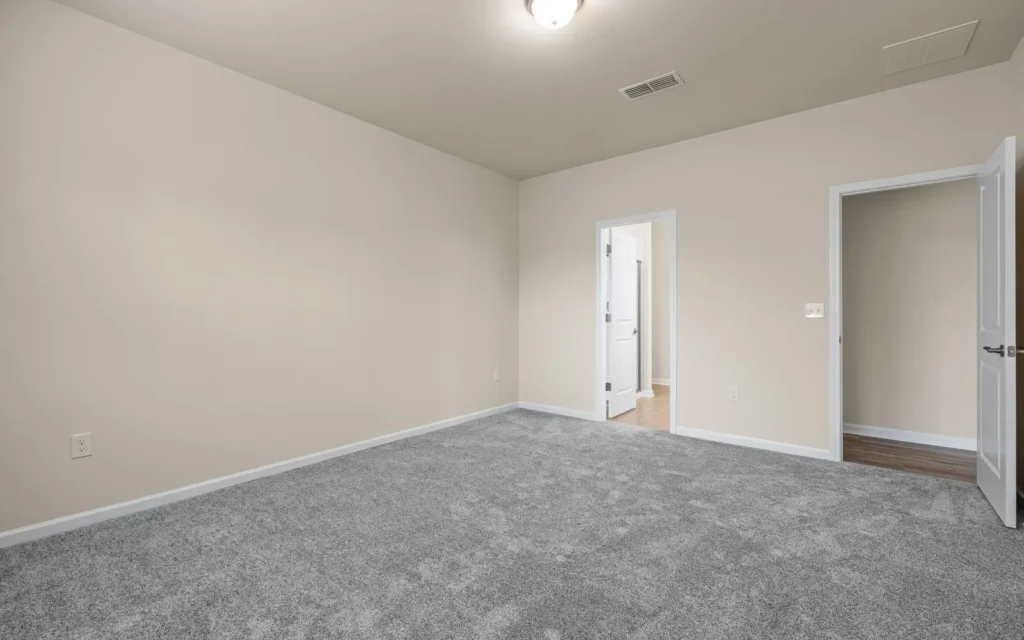
Carpet Experts Toronto – A subfloor and moisture check built into every job – basements aren’t just another room when it comes to carpet.
Get my free quote
Tell us about your carpet project and we'll follow up with a quote.
Final scope always follows a free, itemized quote.
Why Choose Us for Basement Carpet
What every job includes.
Subfloor moisture checked first
Before we recommend pad, since a concrete slab behaves differently than a plywood subfloor.
Pad and vapour barrier matched to what we find
Not applied the same way to every basement.
Familiar with Toronto's seasonal humidity swings
And how they affect basement flooring specifically.
Straight answers if a basement isn't ready
We'd rather tell you upfront than install over a problem.
Finished Basements We Work On
Recreation Rooms
Carpet is warmer underfoot than bare concrete or tile in a naturally cooler space.
Home Offices
Comfort and sound dampening for a basement workspace.
Basement Bedrooms & Apartments
The same moisture-aware pad and subfloor process applied throughout.
Our Process
Moisture-Aware Steps for a Basement Carpet Install
1
Subfloor moisture check
Checked for moisture and condition before pad is recommended.
2
Pad chosen from the reading
Moisture-resistant pad or a vapour barrier where the check calls for it.
3
Tackless, pad & carpet installed
Stretched into place following the same core steps as any carpet install.
4
Seams sealed & transitions fitted
Finished at the stairs or the doorway into the rest of the house.
Three Basement Types
Installing Over Concrete, Sleepers or a Subfloor System
Toronto basements come to us in three main configurations: bare concrete, older wood sleeper floors, and modern panel subfloor systems with a built-in air gap. Each takes carpet a little differently. On concrete, tackless strip is fastened with masonry nails or adhesive and the pad choice does the moisture-management work. Panel subfloor systems raise the carpet off the slab and add warmth underfoot, and we install over them regularly. Older sleeper floors get inspected first, because a spongy spot under old carpet usually means a section needs attention before anything new goes down.
We provide professional basement carpet installation throughout Toronto and the surrounding GTA.
Why Basements Need a Different Approach
Toronto basements typically run in the range of 25-40% relative humidity in winter and 35-45% in summer under normal conditions, based on Health Canada and CMHC guidance. That seasonal swing is exactly why a basement carpet install needs a moisture check on the subfloor and the right pad – carpet and pad chosen without accounting for it is where musty odours and mold risk tend to start, often months after installation rather than immediately.
Choosing Carpet and Pad for a Below-Grade Room
Below grade, synthetic fibres earn their keep. Olefin and polyester shrug off dampness better than natural fibres, and solution-dyed products resist the fading that can show up near basement windows. Wool, as much as we like it upstairs, holds moisture longer and is rarely the right call for a basement. On the pad side, we lean toward moisture-resistant rebond or a pad with a built-in vapour barrier, in a density that suits how the room is used – a dense pad for a basement gym or playroom that takes constant traffic, a softer profile for a guest bedroom that sees a few weekends a year.
Basement Stairs, Doorways and Transitions
The staircase into a basement takes more traffic than the basement itself, so we treat it as part of the same job: sound tackless work on every tread, tight tacking at the nosing, and a clean transition where carpet meets the flooring at the top of the run. At walkouts and doorways we fit transition strips that sit flat and stay put, because a curling edge at a basement door is both a trip point and the first place carpet starts to loosen.
When to Schedule Basement Carpet in a Larger Project
If the basement is getting framing, drywall, paint or waterproofing work, carpet comes last – after dust-heavy trades are done and any new concrete or leveling compound has fully cured. Fresh slabs and patches hold moisture that will read high on a meter for weeks, and installing over them too early undoes all the careful pad selection. Tell us where the rest of the project stands when you request a quote and we will slot the install where it belongs in the sequence.
What Your Basement Quote Covers
A basement carpet quote from us itemizes the carpet, the pad we are recommending and why, removal and disposal of any existing flooring, and the labour to install – including stairs and transitions if they are part of the job. If the moisture check turns up something that needs addressing before carpet, we tell you before any work starts, not partway through. Call (365) 517-1861 or use the quote form and we will set up a time to measure.
Living With Basement Carpet Through Toronto Seasons
A dehumidifier in July and August keeps below-grade humidity in the comfortable range and protects any carpet, however well chosen. Vacuum walk paths weekly, deal with spills promptly, and give the room some air movement in shoulder seasons when the furnace and air conditioning are both idle. Do that, and a properly installed basement carpet reads warm and dry for years – which is the entire point of doing the moisture work up front.
Frequently Asked Questions
Is carpet a good flooring choice for a Toronto basement?
It can be, with the right pad and a moisture check first. We'll assess your specific basement before recommending anything.
What if my basement has had water issues in the past?
Tell us during your quote request – we'll want to know the history before recommending carpet, and in some cases may suggest addressing the underlying issue first.
Can you install carpet over a concrete basement slab?
Yes, with the appropriate pad and moisture barrier based on what the subfloor check finds.