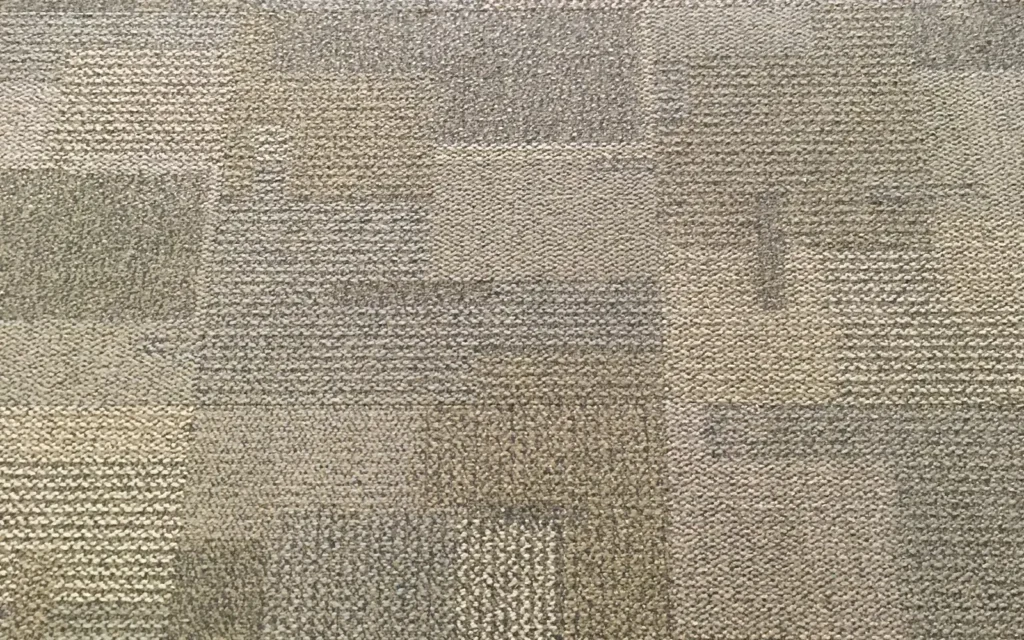
Carpet Experts Toronto – A modular alternative to broadloom, particularly well suited to commercial and multi-unit spaces with concentrated foot traffic.
Get my free quote
Tell us about your carpet project and we'll follow up with a quote.
Final scope always follows a free, itemized quote.
Why Choose Us for Carpet Tile
What every job includes.
Layout planned around traffic pattern
Not applied generically to every floor.
Individual-tile replacement built in
From day one, for easier long-term maintenance.
Experience with offices and common areas
Both commercial and multi-unit residential.
Clear, itemized quote
Scoped to your actual floor plan and tile grade.
Where Carpet Tile Makes Sense
Offices
Especially open-plan layouts with predictable high-traffic paths.
Retail & Reception
Areas that see continuous foot traffic throughout the day.
Multi-Unit Common Areas
An easier long-term maintenance plan than broadloom offers.
Our Process
How Carpet Tile Goes Down
1
Subfloor prepped
Flat, clean and dry – every dip telegraphs through a hard-backed tile.
2
Centreline established
So cut tiles land at the walls where they're least visible.
3
Tiles set
Releasable adhesive, adhesive dots or peel-and-stick backing, depending on the product.
4
No stretching, nothing to loosen
Once set, tile has no tackless strip or pad to shift over the years.
The Practical Magic of Tile
Keep a Box: Attic Stock and Future Repairs
The practical magic of carpet tile is the spare box. We recommend ordering a small overage – typically five to ten percent – and keeping it. Years later, when a tile meets a dropped iron or a permanent stain, the fix is minutes with a spare from your own dye lot, not a search for a discontinued product. We label what we leave behind so whoever does that swap, even if it is you, knows exactly what they are holding.
We provide professional carpet tile installation throughout Toronto and the surrounding GTA.
Why Carpet Tile Instead of Broadloom
Carpet tile is installed as individual modular squares rather than one continuous roll. When wear concentrates in specific spots – under desks, along main walkways, near entrances – individual tiles can be lifted and replaced without re-carpeting the whole floor. That makes ongoing maintenance simpler and less costly over the life of the flooring compared to broadloom, which typically needs full-room replacement once wear becomes visible.
Installation and Pattern Options
Carpet tile can be installed in a monolithic (uniform direction), ashlar (brick-pattern), or quarter-turn layout, each giving a different visual effect and, in some products, changing how noticeable wear patterns are over time. We'll talk through layout options as part of your quote, along with tile grade suited to your space's traffic level.
Backings, Cushion Tile and What They Change
Standard hard-backed tile is the commercial default – stable, low-profile and easy to replace. Cushion-backed tile adds a bonded underlayment layer that improves comfort and acoustics, useful in offices going for a quieter floor and in residential rooms where bare hard-back would feel thin. Some products carry moisture-resistant backings rated for concrete slabs, which is exactly what a basement install wants. The backing decision matters as much as the face fibre, and we walk through it as part of the quote.
Carpet Tile at Home, Not Just at Work
Tile has quietly become a residential option: basements, home offices, playrooms and home gyms all suit a floor that can lose a single damaged square. In basements it pairs well with moisture-rated backings, and in playrooms the ability to lift and rinse a tile under a spill is worth more than any stain treatment. It is not the right look for a formal living room – broadloom still owns soft, seamless luxury – but for working rooms it is a strong answer.
Patterns That Do Real Work
Monolithic, ashlar, quarter-turn and random-lay layouts are not just aesthetics: multi-directional layouts disguise dye-lot variation and wear patterns, which is why offices favour them, while monolithic reads closest to broadloom. Plank-format tiles open up herringbone and runner effects. We lay out the options with samples on your actual floor before you commit. Call (365) 517-1861 to set up a measure and see what fits.
Caring for a Carpet Tile Floor
Day to day, carpet tile asks for the same vacuuming as any carpet. The difference shows when something goes wrong: a stained tile can be lifted and cleaned at the sink or swapped from attic stock, and a water event that would write off broadloom often costs a basement only the affected tiles. Check adhesive-dot products occasionally at high-pivot points – a tile that shifts underfoot takes seconds to reseat. Most owners touch their spare box once or twice a decade, which is exactly how often you want to think about your floor. For a quote on supply and installation, call (365) 517-1861 or use the form and tell us about the space.
A One-Minute Decision Rule
If the space is a working room – office, basement, gym, playroom, rental common area – where wear, spills or future repairs are realistic concerns, tile earns its place. If the room is about softness, seamless sightlines and a premium feel, broadloom wins. When you are genuinely between the two, bring us the room's job description and we will price both options in the same visit.
Frequently Asked Questions
Can you replace individual carpet tiles later if one area wears out?
Yes – that's the main advantage of carpet tile over broadloom, and we can advise on keeping spare tiles from the original installation for exact-match future replacement.
Is carpet tile more durable than broadloom for high-traffic areas?
It generally holds up better under concentrated wear because individual sections can be replaced rather than the whole floor needing to be redone.
Can carpet tile be installed in a space with existing furniture?
In most cases, yes, working around fixed items – let us know your layout when requesting a quote.