Rental Property Carpet Replacement in Toronto: A Practical Guide for Landlords
Carpet takes a lot of abuse in rental properties.
Tenants move furniture. Shoes track in salt and dirt. Pets leave stains and odours. Over time, carpet can become worn even when the rest of the unit still looks perfectly presentable.
For landlords, the question is not simply whether the carpet looks old. The better question is whether it should be cleaned, repaired, stretched, or replaced.
That decision can affect your turnover time, maintenance costs, and how quickly the rental is ready for the next tenant.
This guide explains what to look for when replacing carpet in a Toronto rental property, what to consider when choosing new carpet, and what to check before the installation begins.

When Does Rental Carpet Actually Need to Be Replaced?
Not every worn-looking carpet needs to be removed.
A professional cleaning may be enough if the carpet is structurally sound but has accumulated ordinary dirt and staining. Stretching may solve the problem when the carpet is loose or has developed wrinkles. A localized repair can sometimes deal with a damaged section without replacing the entire room.
Replacement makes more sense when the carpet has reached the point where cleaning or repair will not restore a clean, presentable result.
Look for:
- Permanent staining that remains after professional cleaning
- Heavy wear or flattened traffic lanes
- Fraying, tearing, or damaged seams
- Persistent odour
- Significant pet damage
- Repeated repairs in the same area
- Carpet that is loose, rippled, or badly stretched
- A worn or damaged carpet pad underneath
- Moisture damage or conditions that have affected the flooring underneath
The condition underneath the carpet matters too. Removing the carpet gives you an opportunity to inspect the subfloor and identify problems that would otherwise remain hidden.
Cleaning, Stretching, Repair, or Replacement?
Before ordering new carpet, determine what the existing carpet actually needs.
Professional cleaning
Cleaning can be the right choice when the carpet is still in reasonable physical condition but is dirty or stained.
This is often worth considering between tenants, particularly when the carpet has good remaining life.
Carpet stretching
Loose or wrinkled carpet does not automatically mean the carpet itself needs replacing.
If the carpet and backing are still in good condition, professional stretching may restore a smoother appearance.
Carpet repair
Small burns, tears, pet-damaged areas, or damaged seams may be repairable.
A repair is not always invisible, but it can be a practical option when the surrounding carpet is still in good condition.
Full replacement
Replacement becomes more appropriate when the carpet is worn throughout the unit, heavily damaged, has persistent odour, or is no longer worth restoring.
A carpet installer can usually tell you whether the existing material has enough life left to justify cleaning or repair.
What About Pet Odour?
Pet damage deserves closer attention than an ordinary stain.
If urine has penetrated through the carpet into the backing, pad, or subfloor, simply cleaning the carpet may not solve the problem. Moisture and odour can remain below the visible surface.
The correct approach depends on how extensive the damage is.
In some cases, the carpet can be cleaned and treated. In others, the affected carpet and pad need to be removed and the underlying area inspected and treated before new flooring is installed.
If there is a strong odour in a rental unit after the carpet has been cleaned, do not assume another surface cleaning will fix it. Find out where the odour is coming from first.
Start Planning Before the Tenant Leaves
Carpet replacement is easiest when it is planned as part of the turnover rather than treated as an emergency after the unit is already supposed to be ready.
If you know a tenant is moving out, start thinking about the flooring before the final day.
You can arrange for the unit to be inspected, determine whether the existing carpet can be cleaned or repaired, confirm measurements, choose the replacement material, and coordinate installation.
This becomes particularly important if the property is a condo.
Elevator bookings, building access, loading areas, contractor rules, and permitted work hours can all affect the schedule.
How Long Does Carpet Replacement Take?
There is no single installation time that applies to every rental property.
A straightforward room with good access can be relatively quick. A larger unit with several rooms, stairs, furniture to move, difficult access, damaged subflooring, or condo restrictions can take longer.
The condition of the floor underneath the carpet is one of the biggest variables.
If the installer finds damaged or uneven subflooring after removing the old carpet, that issue may need to be addressed before the new flooring can be installed properly.
For landlords working with a tight turnover schedule, it is better to discuss these possibilities with the installer in advance rather than assume the installation will always fit into a particular number of hours.
Choosing Carpet for a Toronto Rental Property
Rental carpet has a different job from carpet in a lightly used owner-occupied home.
The goal is generally to find a reasonable balance between:
- Durability
- Appearance
- Stain resistance
- Comfort
- Maintenance
- Replacement cost
The most expensive carpet is not automatically the best choice for a rental.
Likewise, choosing the cheapest available product can create problems if it wears quickly or does not hold up to normal rental use.
Nylon
Nylon is widely used where durability is important. It can be a strong option for areas that receive significant foot traffic.
Polyester
Polyester can offer good stain resistance and a wide range of colours and styles. It may be appropriate for some rental applications where appearance and upfront cost are important considerations.
Triexta
Triexta is another fibre option worth discussing with a flooring professional. Its performance characteristics can make it suitable for residential applications, depending on the particular product.
Olefin
Olefin is commonly associated with applications where moisture and stain resistance are important. Its suitability depends on the room and expected use, and it is not automatically the best choice simply because a rental property needs durable flooring.
The important point is to compare the specific carpet product, not just the fibre name. Construction, face weight, density, backing, warranty, and installation all affect performance.
What Colour Should Landlords Choose?
For rental properties, practical usually beats trendy.
Very light carpet can show dirt and staining quickly. Very dark carpet can show lint, dust, and light-coloured debris.
A medium neutral shade is often easier to maintain visually and easier to coordinate with different furniture and wall colours.
If you manage multiple rental units, using similar carpet colours and products can also simplify future repairs and replacements.
You may be able to keep spare material for repairs, provided the product remains available.
Do Not Ignore the Carpet Pad
The carpet itself gets most of the attention, but the pad underneath it matters.
A suitable pad can affect how the carpet feels underfoot and how it performs over time. The correct specification depends on the carpet and the installation.
Replacing worn carpet while leaving an unsuitable or deteriorated pad underneath may undermine the new installation.
Ask the installer which pad is recommended for the specific carpet being installed and the type of rental property involved.
Basement Rental Units Need Extra Attention
Basement units can present different flooring conditions from above-grade rooms.
Before installing new carpet, check for signs of moisture, dampness, staining, or other conditions that could affect the flooring.
Carpet should not be used to hide an underlying moisture problem.
If there has been water intrusion or persistent dampness, identify and address the source before installing new flooring.
This is particularly important because replacing the carpet without addressing the underlying problem can simply result in another damaged carpet.
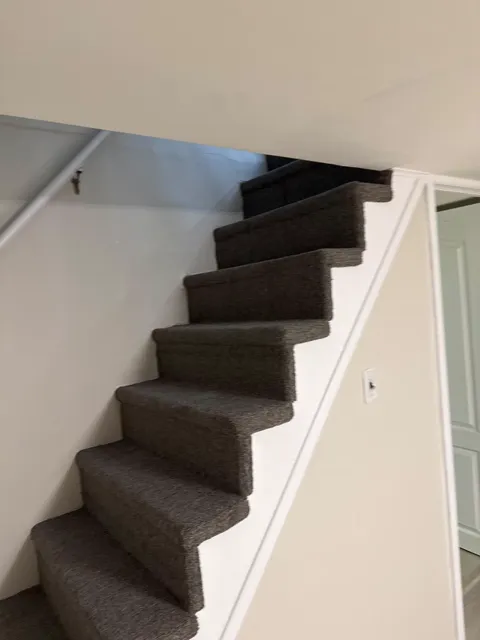
What About Carpeted Stairs?
Stairs experience concentrated traffic and can wear differently from bedroom or living-room carpet.
The installer should inspect:
- The existing carpet
- Tack strips
- Stair edges and transitions
- The underlying stair surface
- Any loose or damaged sections
Stair installation also requires proper fitting and secure attachment. It is not simply a matter of cutting a piece of carpet to fit each step.
If the property has carpeted stairs, include them in the inspection rather than evaluating only the flat flooring.
Toronto Condo Carpet Installation
Condo rentals can involve additional logistics that do not apply to a typical house.
Before scheduling an installation, check whether the building requires:
- Contractor registration
- Proof of insurance
- Elevator reservations
- Loading or parking arrangements
- Specific working hours
- Advance notice to management
- Protection for common areas
- Disposal procedures
Do not assume that a contractor can simply arrive with carpet and start work.
The building’s rules should be confirmed before the installation date.
For apartment buildings covered by Toronto’s RentSafeTO program, owners and operators also have building maintenance and tenant-notification responsibilities. RentSafeTO applies to purpose-built rental apartment buildings with three or more storeys and ten or more units. It does not apply to every type of rental property, including individual condo units or private-home basement apartments.
What Happens After the Old Carpet Comes Out?
Carpet removal is when hidden problems become visible.
Once the old flooring and pad are removed, the installer may find:
- Damaged subflooring
- Loose boards
- Uneven areas
- Old adhesive
- Water staining
- Pet damage
- Damaged tack strips
- Problems around transitions
Not every issue requires major work, but it is better to identify problems before the new carpet is installed.
If the floor needs preparation, ask what is required and why. A properly prepared surface gives the new carpet a better chance of performing as intended.
How Much Does Rental Carpet Replacement Cost in Toronto?
There is no reliable single price for every rental property.
The total cost can depend on:
- Total carpet area
- Carpet selected
- Carpet pad
- Number of rooms
- Stairs
- Removal of existing carpet
- Disposal
- Furniture moving
- Floor preparation
- Repairs to the subfloor
- Accessibility
- Condo requirements
- Installation complexity
A small apartment with straightforward access can be very different from a multi-level property with stairs and extensive preparation work.
When comparing quotes, make sure you are comparing the same scope of work.
Ask whether the quote includes removal, disposal, pad, installation, furniture moving, floor preparation, and any applicable building requirements.
A lower initial quote is not necessarily cheaper if important work has been excluded.
What Should a Landlord Have Ready Before Requesting a Quote?
You can usually make the quoting process easier by providing:
- Property address
- Approximate unit size
- Number of carpeted rooms
- Whether stairs are carpeted
- Photos of the existing carpet
- Photos of any visible damage
- Whether pets have occupied the unit
- Whether there has been water damage
- Condo or building access requirements
- Your preferred installation timeframe
If you have floor plans or previous flooring measurements, keep those available as well.
The more information the installer has upfront, the easier it is to identify potential complications before the job is scheduled.
Should You Replace Carpet Between Every Tenant?
Not necessarily.
Carpet does not automatically need to be replaced simply because a tenant has moved out.
If it is clean, structurally sound, and still presents well, professional cleaning may be all that is needed.
Replacement should be based on condition rather than an arbitrary turnover schedule.
For landlords managing several properties, it can be useful to keep basic records of flooring installations, including the product, colour, date installed, and supplier.
That information can make future repairs and replacements easier.
Can a Tenant Be Charged for Carpet Damage?
This is an area where landlords should be careful.
Ontario’s residential tenancy rules distinguish between ordinary wear and damage beyond normal wear and tear. Landlords should not automatically assume that the full cost of replacing old carpet can be charged to a departing tenant.
The age and condition of the carpet, the nature of the damage, and the circumstances of the tenancy can all matter.
Ontario’s Residential Tenancies Act also limits the types of deposits a landlord can collect. A landlord generally cannot treat a tenant’s last-month rent deposit as a general damage deposit.
If you believe a tenant has caused damage beyond normal wear and tear, document the condition carefully and get appropriate advice before attempting to recover replacement costs.
Landlord Access for Carpet Replacement
If the tenant is still living in the unit, access needs to be handled properly.
Under Ontario’s Residential Tenancies Act, a landlord can generally enter a rental unit to carry out a repair, replacement, or other work after giving at least 24 hours’ written notice. The notice must specify the reason for entry, the day, and a time between 8 a.m. and 8 p.m., subject to the Act’s other rules and exceptions.
Do not arrange for a carpet installer to enter an occupied unit without first making sure the entry complies with the applicable tenancy rules.
If the unit is vacant, the situation is different, but landlords should still coordinate access appropriately with the building, property manager, or occupant where applicable.
When Carpet Replacement Is Not the Best Solution
Sometimes the right answer is not new carpet.
If the property has recurring moisture problems, poor ventilation, damaged subflooring, or another underlying issue, replacing the carpet may only treat the symptom.
Similarly, if carpet repeatedly becomes damaged because of the way a particular area is used, it may be worth considering whether another flooring material would make more sense.
The right flooring choice depends on the property.
A bedroom in a quiet rental may justify a different approach from a heavily used hallway, basement, or set of stairs.
A Simple Rental Carpet Replacement Checklist
Before the job:
- Inspect the carpet
- Decide whether cleaning, stretching, repair, or replacement makes sense
- Check for pet odour and moisture problems
- Confirm measurements
- Choose the carpet and pad
- Confirm installation requirements
- Check condo or building rules
- Arrange access
- Confirm removal and disposal
- Discuss possible subfloor repairs
During removal:
- Inspect the subfloor
- Check for moisture or staining
- Look for damaged tack strips
- Confirm that the surface is suitable for new carpet
- Address necessary repairs before installation
After installation:
- Check seams and transitions
- Check stairs if applicable
- Confirm the carpet is properly stretched
- Inspect for visible installation issues
- Keep the product information and leftover material for future repairs
The Best Carpet for a Rental Is the One That Fits the Property
There is no single carpet that is right for every Toronto rental.
A good rental flooring decision balances durability, appearance, maintenance, tenant expectations, and cost.
The cheapest carpet may not be the best value. The most expensive carpet may not provide a meaningful advantage in a typical rental. The right choice depends on how the property is used and how much traffic the flooring is expected to handle.
Most importantly, do not replace carpet automatically.
Start by determining what is actually wrong with the existing flooring. Sometimes a professional cleaning is enough. Sometimes stretching or a repair makes more sense. When the carpet has reached the end of its useful life, replacement is the better investment.
For landlords preparing a unit for a new tenant, a professional carpet assessment can help determine whether the property needs cleaning, repair, stretching, or full replacement before you commit to the cost of new flooring.